
Menu
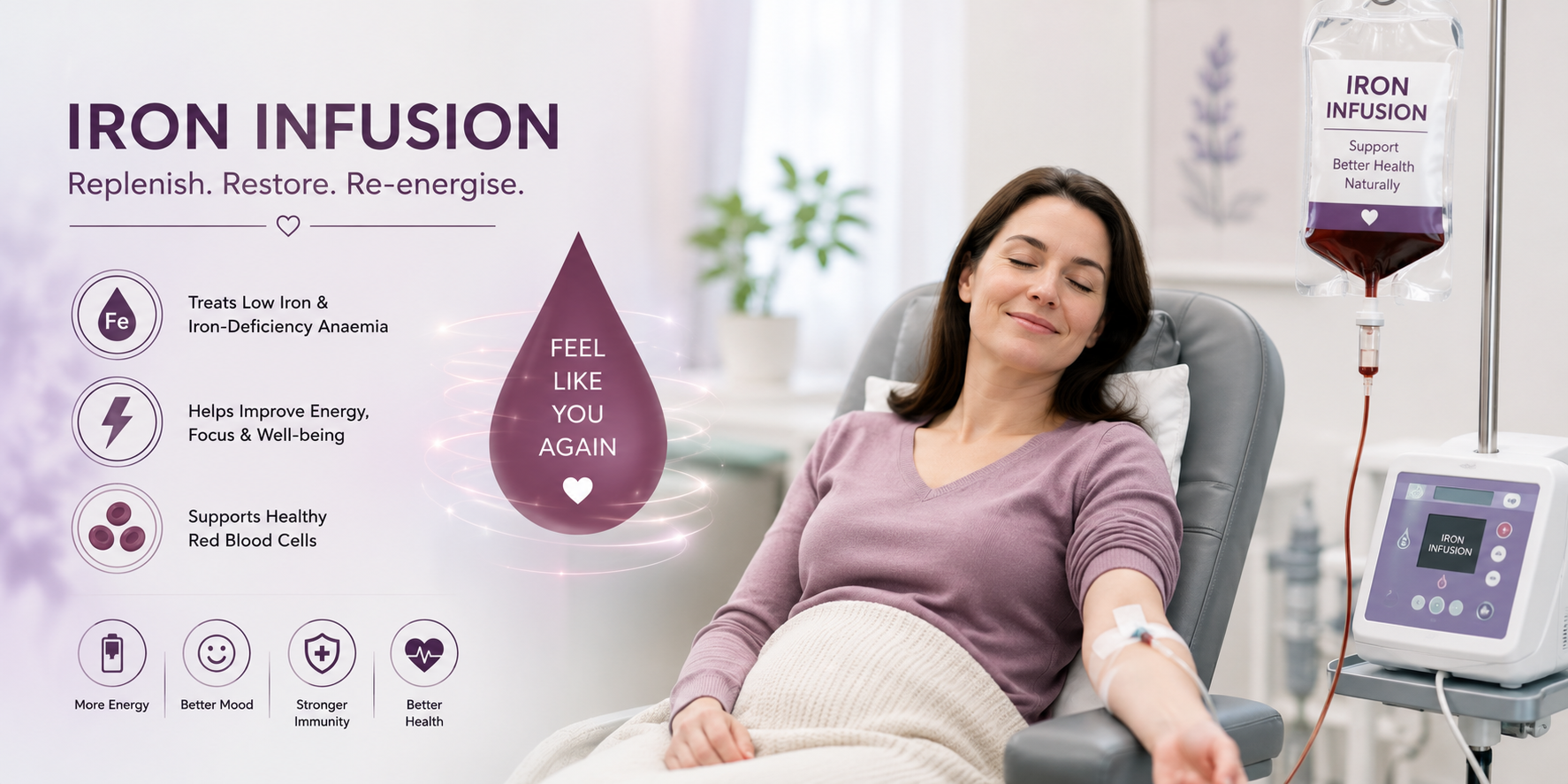
Feeling tired, weak or short of breath more often than usual can have a number of causes, and low iron is one of the most common. It can be easy to put persistent fatigue down to a busy schedule or poor sleep, when a straightforward blood test might point to something more specific and more treatable. At Doctors @ Coomera Central, GPs provide on-site iron infusions for patients in Upper Coomera whose iron levels need to be restored, so assessment and treatment can both happen in one convenient place rather than requiring referral elsewhere.
Low iron can affect people of any age, though it is particularly common in women of reproductive age, people with certain gut conditions, and those following a restricted diet. Because tiredness has so many possible explanations, from poor sleep to stress to other medical conditions, low iron is often only picked up once a blood test is done, which is why raising ongoing fatigue with a GP is worthwhile rather than assuming it will pass on its own.
Low iron is one of the most common nutritional deficiencies, and it can affect energy levels, concentration and general wellbeing. Healthdirect notes that iron-deficiency anaemia can develop gradually, which means symptoms are not always obvious at first and can be mistaken for everyday tiredness. Blood tests are the most reliable way to confirm whether iron levels are low, rather than relying on symptoms alone, since fatigue and low mood can also stem from a range of other causes that a GP can help rule in or out.
An iron infusion delivers iron directly into the bloodstream through a small drip, usually placed in the hand or arm. Because the iron goes straight into circulation, it can replenish iron stores more quickly than tablets, which is helpful for people who cannot tolerate oral iron or do not absorb it well. Some people find that oral iron tablets cause stomach upset, constipation or nausea, which can make it hard to take them consistently, and this is often where an infusion becomes a more practical option.
A GP may discuss an iron infusion where oral iron has not worked or is not suitable, where iron levels need to be raised quickly, or in certain situations such as during pregnancy or before surgery. The doctor will review symptoms, history and recent blood tests, such as iron studies, to decide whether an infusion is an appropriate option for that individual. This assessment step matters, since the right approach to raising iron levels depends on the underlying cause and each patient’s broader health picture.
An iron infusion is generally a two-step process. The first appointment is an initial consultation, supported by recent blood tests, to confirm an infusion is appropriate. At the second appointment, the infusion itself is given, usually taking around 30 minutes, with monitoring during and for a short time afterwards, so it is worth allowing up to an hour in total for the appointment. Most people can return to their normal activities soon after, and the GP will advise on any aftercare, which may include a follow-up blood test to check how iron levels have responded over the following weeks.
Iron infusions are generally well tolerated and can lead to a faster improvement in iron levels and energy than tablets for many people, though individual results vary and a GP can talk through what to reasonably expect. As with any procedure, there are some risks to be aware of. Mild side effects can include headache, nausea, temporary changes in taste or short-lived muscle aches. Skin staining at the infusion site is uncommon but can be long-lasting, and serious allergic reactions are rare and are closely monitored for during the appointment. A GP will explain the benefits and risks in full before proceeding, so patients can make an informed decision about whether an infusion is the right option for their circumstances.
Because these risks are monitored for during the appointment itself, patients are not left to manage any reaction on their own. Having a GP present throughout the infusion, rather than a non-medical setting, means any concerns that arise can be addressed immediately by someone familiar with the patient’s medical history.
Having the initial consultation, blood tests and infusion itself managed through the same clinic means a patient’s GP has a complete picture of their iron levels, history and any other health considerations that might affect treatment, such as pregnancy or an upcoming procedure. This can be more straightforward than being referred to a separate infusion centre, where the treating clinician may not have the same familiarity with a patient’s broader health history. It also means any follow-up blood tests or ongoing monitoring can happen with a GP who already knows the full picture.
Iron infusion consultations are available seven days a week, 8am to 5pm, at Doctors @ Coomera Central, located on Coomera Grand Drive, next to ALDI in Upper Coomera, with ground-floor, wheelchair-accessible rooms and on-site parking. As an iron infusion is a procedure, a fee may apply, usually with a Medicare rebate, while the initial consultation may be bulk billed depending on eligibility. Reception can confirm current fees for anyone wanting to know the likely cost before booking.
Persistent tiredness is easy to dismiss as a normal part of a busy life, particularly for parents, shift workers or anyone managing a demanding routine around Upper Coomera. A simple blood test can help clarify whether low iron is part of the picture, and where it is, an on-site iron infusion offers a practical, GP-supervised way to address it without needing a referral to a separate clinic.
Whether low iron has shown up in a recent blood test or has simply been suspected for a while based on ongoing tiredness, an initial conversation with a GP is the right starting point to work out what, if anything, needs to happen next.
If you think you might have low iron, contact Doctors @ Coomera Central on (07) 5638 5315 to arrange an initial consultation.